 |
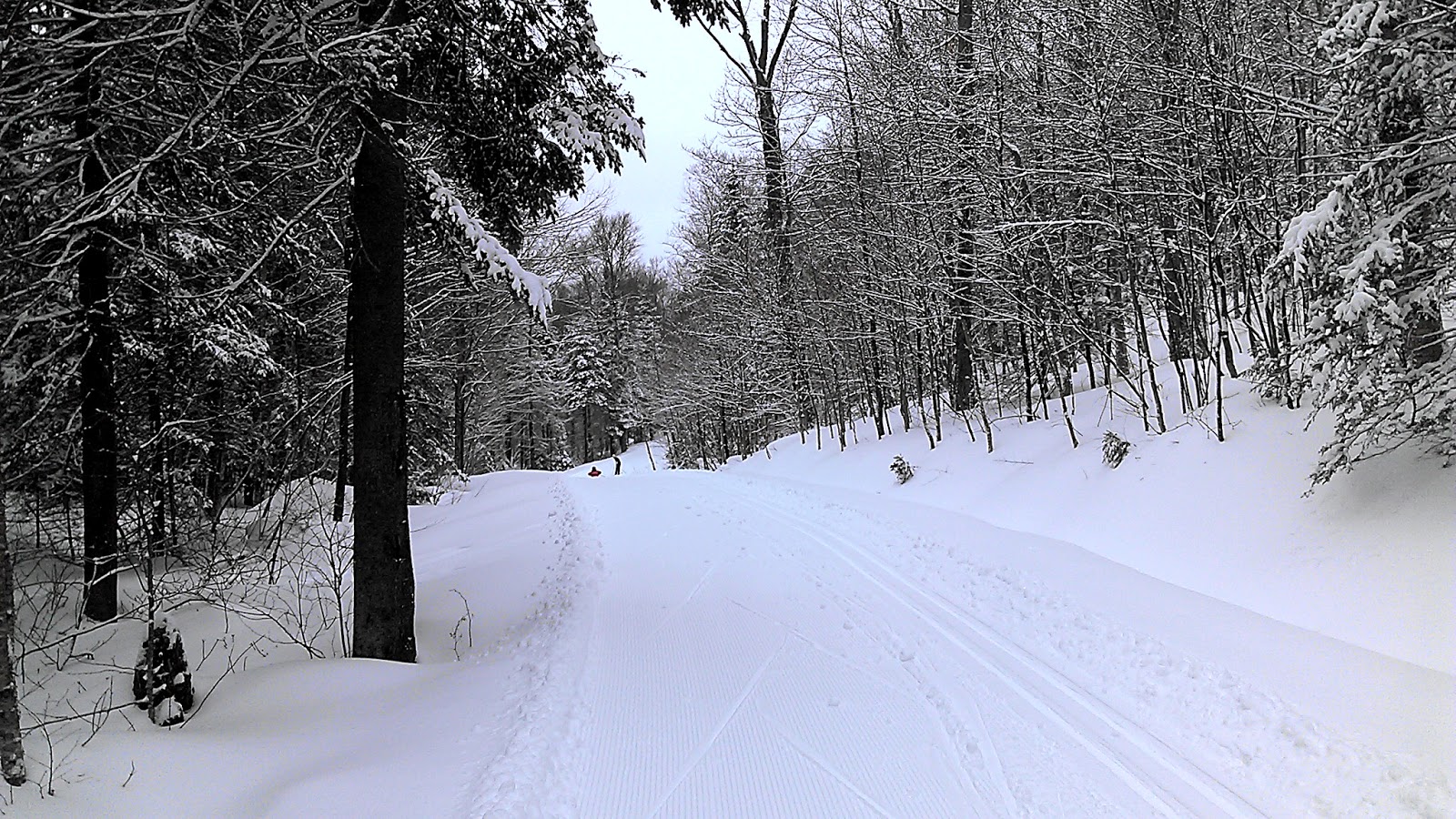
| Prospect Mountain, Vermont. March 19, 2013 |
Wednesday, March 20, 2013


Wednesday, March 13, 2013
Better than 'Urban IX'
Well, I was certainly wrong about the Italian part.
I was stunned by a lot of what happened. He's from Latin America! the first non-European pope, a true breakthrough for the Church. He's a Jesuit, which means he's not a dogmatic moron (I looked at some of the backgrounds of these guys, and most are more indoctrinated than educated). He took the name Francis, after one of the more likable saints, which suggests both humility and a willingness to set aside the doctrinaire schisms between sects within the Church (Franciscans and Jesuits have sort of different worldviews).
And it keeps going: he is a chemist, so he likes science (no coincidence that in Bill Maher's jeremiad of a documentary, Religulous, the two most sympathetic apologists for faith are Catholic priests. Give the Church credit for coming a long way on the role of science. No one learns about Adam and Eve eating brontosaurus burgers in parochial school). And bless him, his harsh words about neoliberal orthodoxy are very welcome. I hope Paul Ryan is listening (he may be, but lay Catholics always seem to ignore what the clerics say).
But... he's also said that gay people asking to be treated like humans is the work of Satan. He's said to be close to Benedict on most ideological points, so don't expect much actual progress on anything. And his role during Argentina's military dictatorship deserves very close scrutiny — at the moment, it appears unclear if he is an evildoer or just a coward. The questions are serious, and a cynic would wonder whether the gentle, carefully constructed public face will merely paper over more of the same. You can never be too cynical when thinking about the Church.
This is the frustrating thing about the Church. I know precisely his opinion on capital punishment, for example, and I know it is correct. And I can also guess what he thinks of contraception. It's a jumble of position, humanity at its most charitable and noble, and its most sick and depraved. It's best to just steer clear.
And yet, watching the hullabaloo from St. Peter's Square on the internet this afternoon. I found myself again wishing it meant something to me and mourning that it doesn't. Ah well, I should just get my melodramatic spectacle fix from opera or something.
I was stunned by a lot of what happened. He's from Latin America! the first non-European pope, a true breakthrough for the Church. He's a Jesuit, which means he's not a dogmatic moron (I looked at some of the backgrounds of these guys, and most are more indoctrinated than educated). He took the name Francis, after one of the more likable saints, which suggests both humility and a willingness to set aside the doctrinaire schisms between sects within the Church (Franciscans and Jesuits have sort of different worldviews).
And it keeps going: he is a chemist, so he likes science (no coincidence that in Bill Maher's jeremiad of a documentary, Religulous, the two most sympathetic apologists for faith are Catholic priests. Give the Church credit for coming a long way on the role of science. No one learns about Adam and Eve eating brontosaurus burgers in parochial school). And bless him, his harsh words about neoliberal orthodoxy are very welcome. I hope Paul Ryan is listening (he may be, but lay Catholics always seem to ignore what the clerics say).
But... he's also said that gay people asking to be treated like humans is the work of Satan. He's said to be close to Benedict on most ideological points, so don't expect much actual progress on anything. And his role during Argentina's military dictatorship deserves very close scrutiny — at the moment, it appears unclear if he is an evildoer or just a coward. The questions are serious, and a cynic would wonder whether the gentle, carefully constructed public face will merely paper over more of the same. You can never be too cynical when thinking about the Church.
This is the frustrating thing about the Church. I know precisely his opinion on capital punishment, for example, and I know it is correct. And I can also guess what he thinks of contraception. It's a jumble of position, humanity at its most charitable and noble, and its most sick and depraved. It's best to just steer clear.
And yet, watching the hullabaloo from St. Peter's Square on the internet this afternoon. I found myself again wishing it meant something to me and mourning that it doesn't. Ah well, I should just get my melodramatic spectacle fix from opera or something.
Tuesday, March 12, 2013
"Popin' Ain't Easy"
Though the Catholic Church and I have resolutely parted ways, I can admit there's a Catholic shaped hole in my "soul." That's why when asked I'll still say I'm "ethnically Catholic." If it weren't for the monstrosity of its crimes — institutional complicity in the rape of children — I can imagine a world with a few different breaks in which I am a Liberation Theology-spouting, local pastor-bothering, Democratic-voting, member of the Roman Church's lefty fringe. Of course, the institution has also done everything possible since Second Vatican to drive folks like that away.
So I'm fascinated in what the Old Firm is up to as it picks a new CEO, and I've followed the coverage closely. I've found the tone a bit frustrating — in 2005, when it had been almost 30 years since the last time it happened, there was a need to go over the details. About locking up in the Sistine Chapel, voting in Latin, the threaded ballots, the chimney. And the searching coverage what may or may not be happening amongst the "Roman" and the "Reform" cardinals is also annoying, the same kind of horse race election coverage we have to put up with on election years.
The issue is that there is no actual information out there, but it still must be covered. But that doesn't mean you can't think beyond the obvious narratives, especially when it isn't working. We hear over and over how the Church is in "crisis." That would be a grant opportunity to really dig into how things are — all the "papabile" cardinals have positions on sex abuse and financial mismanagement and corruption within the Curia. Why not try to explain it? because that would be dull and depressing.
And the joke is on everyone because just like the previous conclave, this one will be anticlimactic. If you want to bet, just look at the record which, conveniently, goes back centuries. My grandmother used to say about things that are obvious, "Is the Pope Italian?" I grew up under John Paul II, so that didn't make sense to me. What she meant, of course, is that the Pope was always Italian, except for this strange 30-odd year omission that the Italians are probably sore about. So draw your own conclusions.
But the occasion of a conclave is a great chance to ask more questions, and I've been unimpressed with the ones Catholics seem to be having with themselves. There is a great urge to not ask too many questions. For example, I am personally outraged that Benedict XVI welshed on his deal. The reason John Paul II hung on for so long, and allowed his weak, drooling half-corpse to be dragged around the world was to make a very important Catholic point about the value of suffering and duty. It was "Christ-like." Of course, that's complete sado-masochistic medieval nonsense, but that's the Church's logic and good for him for sticking to it.
For Benedict to quit was cowardly and hypocritical. Should a frail old man be allowed to leave his demanding job for a quiet life of contemplation and prayer? Absolutely. But if you stubbornly cling to your dogmas, presume to push them on others, at least have the decency to be consistent. If you can't budge from your position that condoms cause AIDS, or tone down your hatred of gay people, or care a bit more for living humans rather than fetal tissue, then no, get back in the chair. Your worldly job ain't done yet.
No surprise that television in particular loves the pomp and ceremony of what going on. In all coverage of costumes and strange languages, it feels a little like the way they would cover a Unification Church mass wedding or some such. It is a weird exotic ritual that foreigners get up to. And many are bitching that it is a waste of time and resources on cable television that could be devoted to the next round of sequester posturing or musing over who will run in 2016.
Certainly you can dismiss and mock it, or you could consider that this is an unbroken tradition handed down for twenty centuries that has been a major underpinning of Western civilization (for better and for worse). Many critics, and many former Catholics, begrudge the church its opulence, the fancy costumes and the ceremony. But rubbish, that's what's great about it. This, by its own logic, again, is the Kingdom of God on earth. This represents some other plane of existence, it damned well better be fancy.
Last year around this time I was pottering around Italy, and of course spent many hours in churches in Venice and Florence. And the stirrings in my old Catholic soul were very great. What, I wonder, would my life have been like if my parish church was the Church of Madonna dell'Orto in the Cannaregio district of Venice rather than Sacred Heart of Jesus Church in the Polish neighborhood of Easthampton, Massachusetts. If I had grown up staring at Tintoretto's monumental "Last Judgment" rather than a dingy replica of Our Lady of Czestochowa, and some of those awful pastel-colored reproductions of the life of Christ. Even in elementary school I knew it was cheap. I realize that's not supposed to matter, but you know, it does. It seems like an accurate reflection of the scale of the matter that the cardinals are meeting beneath Michelangelo's "Last Judgment," a painting that many humans would recognize on sight.
So I'm fascinated in what the Old Firm is up to as it picks a new CEO, and I've followed the coverage closely. I've found the tone a bit frustrating — in 2005, when it had been almost 30 years since the last time it happened, there was a need to go over the details. About locking up in the Sistine Chapel, voting in Latin, the threaded ballots, the chimney. And the searching coverage what may or may not be happening amongst the "Roman" and the "Reform" cardinals is also annoying, the same kind of horse race election coverage we have to put up with on election years.
The issue is that there is no actual information out there, but it still must be covered. But that doesn't mean you can't think beyond the obvious narratives, especially when it isn't working. We hear over and over how the Church is in "crisis." That would be a grant opportunity to really dig into how things are — all the "papabile" cardinals have positions on sex abuse and financial mismanagement and corruption within the Curia. Why not try to explain it? because that would be dull and depressing.
And the joke is on everyone because just like the previous conclave, this one will be anticlimactic. If you want to bet, just look at the record which, conveniently, goes back centuries. My grandmother used to say about things that are obvious, "Is the Pope Italian?" I grew up under John Paul II, so that didn't make sense to me. What she meant, of course, is that the Pope was always Italian, except for this strange 30-odd year omission that the Italians are probably sore about. So draw your own conclusions.
But the occasion of a conclave is a great chance to ask more questions, and I've been unimpressed with the ones Catholics seem to be having with themselves. There is a great urge to not ask too many questions. For example, I am personally outraged that Benedict XVI welshed on his deal. The reason John Paul II hung on for so long, and allowed his weak, drooling half-corpse to be dragged around the world was to make a very important Catholic point about the value of suffering and duty. It was "Christ-like." Of course, that's complete sado-masochistic medieval nonsense, but that's the Church's logic and good for him for sticking to it.
For Benedict to quit was cowardly and hypocritical. Should a frail old man be allowed to leave his demanding job for a quiet life of contemplation and prayer? Absolutely. But if you stubbornly cling to your dogmas, presume to push them on others, at least have the decency to be consistent. If you can't budge from your position that condoms cause AIDS, or tone down your hatred of gay people, or care a bit more for living humans rather than fetal tissue, then no, get back in the chair. Your worldly job ain't done yet.
No surprise that television in particular loves the pomp and ceremony of what going on. In all coverage of costumes and strange languages, it feels a little like the way they would cover a Unification Church mass wedding or some such. It is a weird exotic ritual that foreigners get up to. And many are bitching that it is a waste of time and resources on cable television that could be devoted to the next round of sequester posturing or musing over who will run in 2016.
Certainly you can dismiss and mock it, or you could consider that this is an unbroken tradition handed down for twenty centuries that has been a major underpinning of Western civilization (for better and for worse). Many critics, and many former Catholics, begrudge the church its opulence, the fancy costumes and the ceremony. But rubbish, that's what's great about it. This, by its own logic, again, is the Kingdom of God on earth. This represents some other plane of existence, it damned well better be fancy.
Last year around this time I was pottering around Italy, and of course spent many hours in churches in Venice and Florence. And the stirrings in my old Catholic soul were very great. What, I wonder, would my life have been like if my parish church was the Church of Madonna dell'Orto in the Cannaregio district of Venice rather than Sacred Heart of Jesus Church in the Polish neighborhood of Easthampton, Massachusetts. If I had grown up staring at Tintoretto's monumental "Last Judgment" rather than a dingy replica of Our Lady of Czestochowa, and some of those awful pastel-colored reproductions of the life of Christ. Even in elementary school I knew it was cheap. I realize that's not supposed to matter, but you know, it does. It seems like an accurate reflection of the scale of the matter that the cardinals are meeting beneath Michelangelo's "Last Judgment," a painting that many humans would recognize on sight.
Monday, March 4, 2013
Shipping out
 |
| Our ride |
I'd been thinking a lot about cruises because I had my students read David Foster Wallace's "A Supposedly Fun Thing I'll Never Do Again" (though I always have them read the "original" "Shipping Out," as it appeared in folio in Harpers. There are important reasons of intellectual honesty for this). This was the article, I explained to that, that really set us on fire when I was in J-school. Sure, you can admire Gay Talese and Joan Didion and Joseph Mitchell, but DFW seemed to capture, at that moment, the potential magic hiding in nonfiction. I'm happy to have noticed that my students still seem to respond to it all these years later.
Wallace describes the weird predicament of being "pampered" to death, and what it means that we find recreation in being entertained and distracted from the bleak awareness that we are floating around on an ocean of nothingness, and are small and insignificant and dooomed. "All of the Megalines offer the same basic product," Wallace writes. "Not a service or a set of services but more like a feeling: a blend of relaxation and stimulation, stressless indulgence and frantic tourism, that special mix of servility and condescension that's marketed under configurations of the verb 'to pamper.'" As with everything he wrote, it's impossible to avoid the heaviness underlying all this, which would lead to his ultimate sad end. You can't go back and reread it without seeing it through that lens. In fact, in the past few weeks I read DT Max's biography of Wallace, and realize how greatly the problems he was having at the time shaped his reporting — particularly the weirdly abrupt ending, which suggests he wasn't kidding and the agoraphobia was a bit more than "borderline."
I constantly compared our experience aboard the good old "Jewel of the Seas" to Wallace's, and spent a lot of time noting the differences. I didn't quite feel the level of luxuriousness he describes (because we were on a different cruise line?) and we weren't on a junket, so things had a certain value. Also, unlike DFW, I didn't find it too strenuous to occasionally turn my critical thinking faculties off, and enjoy getting a blotchy tan/sunburn with a melting pina colada within reaching distance.
So my complaints and observations are of a much more down-to-earth sort. Like: no matter how rich it was intended, nor how copiously it was presented, nor how pretentious it was described, the food always felt like it came from a freezer. Also: there is something very annoying for many of us about being kept on an insanely tight and mean schedule. Like in Key West, I'd spent awhile on the Hemingway House tour, had a Papa Doble at Sloppy Joe's, and was settling in at a bar near the seaport for a fish sandwich, watching the shadows lengthen and wondering who all these people were that seemed to have stepped out of a Jimmy Buffett B-side, when it was time to get back to the damned ship already. We could have used a few more hours on the beach in Cozumel but... damned ship.
The ship itself is so big that it doesn't feel crowded (unless you try to take an elevator), but the laws of herd dynamics dictate that there are times and places that are incredibly crowded. On the upper decks when the sun is out, morning in the gym, the first few minutes after the dining room opens, any buffet situation.
There were plenty of great things as well. Those same herd dynamics meant that if you had successfully broken away, some places would feel like a ghost ship. In the evening, for example, when everyone else was watching an embarrassing simulacrum of a Broadway review in the theater, or plugging away at the casino, you had the decks entirely to yourself. Just the open sea, the windswept deck, the moonlight glinting off into the distance. That would have to be my favorite part; that, and the fact that sleeping on a gently rocking ship is primordially relaxing.
There are a number of big issues about cruising which didn't come up, particularly the possibility of disaster. Hovering over everything like a ghost was the story of the Carnival Triumph, which was all over the news in the days before we sailed. There was everything you feared, being dead in the water with no power, with the plumbing failing, with little food or water. I'm sure everyone was aware of what happened, but no one mentioned it. And overall, everyone studiously avoids thinking about the constant reminders that you are on a self-contained vessel adrift in a hostile environment. The first thing you do when you get aboard is figure out where your lifeboat is and how to get there. You are always reminded how finicky the toilet and plumbing system is, and every public restroom advises you to open the door with a paper towel in your hand. You're always aware of how weird this is.
Monday, October 1, 2012
Images from a train across the Ukraine
 |
| Eastern Ukraine, Sept. 29, 2011 |
This is the first anniversary of that trip, when we left Moscow's Kievskaya Vokzal in the evening, and a day and a half later we arrived at Budapest's Keleti Station. Along the way we had little to do but stare out the window at the scene unfolding.
Travelling by train is a great way to see a place, but a limited one for experiencing it. You have no power to linger over something interesting, or to engage with the people you see and expose yourself to the possibility of a surprise or a challenge. You are alone with your thoughts, which you have no choice but to confront, and have the time to fill the landscape with something like that linear narrative that we so often prefer.
This part of the world, the opening of the steppes of Eurasia, perhaps gets such a reputation because there is a sameness to it. Along the way are farms, large and small, usually with cattle grazing precariously close to the tracks. There are gardens, well-tended in a rough and practical way, and little houses often in some form of disrepair. The towns are perfectly Soviet, which is one of the weird architectural legacies of the USSR. From the Polish frontier clear across the globe to the Pacific Ocean, you'll find dotting the land the same brutal apartment blocks, the severe, ersatz neoclassical train stations, the modest commercial downtowns. There will be kiosks selling all manner of things, and more than a few Lada taxis waiting nearby. After it all, the contrast with Europe — even the rougher parts of eastern Europe — is striking.
But while life goes on, the past is always there. The images and stories of the eastern front were always right there. It is a landscape that has seen so much suffering that you can't imagine it without armies marauding back and forth, about each little copse or hill was the scene of some drama, which claimed the lives of millions upon millions within living memory. It was in my mind when we arrived in Kiev, on what I knew was the 70th anniversary of the beginning of the Babi Yar massacre. I wonder how the city, the country, would remember this event, which was one of the first horrible chapters of the Holocaust, when the killing was immediate and brutal and had not yet evolved into the chilling, industrial process that is perhaps more potent in our memory. As the Yevtushenko poem described it, the silence screams.
 |
| Spalny vagon |
 |
| Kiev |
 |
| The land |
 |
| The station at Vinnytsia |
 |
| A few of the many cups of tea we drank, courtesy of RZD |


 |
| L'viv station, night, Sept. 29, 2011 |
Wednesday, September 26, 2012
The fanciest McDonalds I know
 |
| Nyugati pályaudvar, July 22 |
The idea of there being McDonalds franchises overseas would seem at first glance to suggest the export of the same bland, homogenized, terribly unhealthy strip-mall eating culture that is making America so obese and bland. But there's a weird quirk that I don't think anyone foresaw: just about any McDonalds you go to abroad would be the best McDonalds in America. The restaurant will be clean, the staff will be cheerful, the french fries will be perfect. None of the usual nonsense of alienated labor and low standards you see in the U.S.: tables with used napkins on them, surly counter staff who want to make it clear that they despise you, and limp, cold fries that hit home the fact that this food-like item which is going to eventually kill you might as well make you miserable along the way.
The one pictured above is at Nyugati railway station in Budapest on the Nagykörút. It was built inside what had been the station restaurant.
Monday, September 24, 2012
The wrong kind of exceptionalism
The idea of America's "exceptionalism" is a literal article of faith for one of the country's two major political enterprises. But it's not something I take on its face, because though we get a lot of big things right, we screw up a ton of details. For starters:
How long do we think we'll fool ourselves about the metric system? — Do people realize that only Burma, Liberia, and ourselves still refuse to use what is one of mankind's great intellectual achievements? This is stubbornness carried to absurdity. And the process of making the switch wouldn't even be that bad. After about a week, you forget how many groats make up a hogshead, or whatever other random grab bag of a system we waste too much of our memory trying to keep straight.
Your shower head doesn't have to be bolted to the wall — The fact that they are in almost every American shower must be some kind of dumb, vestigial Puritan thing, because there's really no sensible reason why we keep doing this. That space can be very practical for cleaning buckets, grills and things like that. And if by chance someone is so creeped out by a handheld spiggot of water for their ablutions, just put it in the holder and don't touch it!
Stop complaining about dollar coins — I think everywhere on earth people have abandoned greasy, crumbled-past-recognition banknotes for their most common lowest denomination. But Americans are passionate in their petty annoyances: they bitched about Anthony dollars, Sacagewea dollars, the presidents series. Because change is change and dollars and dollars. I've never heard an argument against switching to dollar coins that wasn't based on the routine "I don't want to change the thoughtless routine I've been following my whole life" act (see the first entry). Dollar coins are simple to use and would save us money because they don't have to be replaced all the time.
Public transportation isn't just for losers — From my window in Budapest I could see the Danube, and running along it was Ujpest Rakpart, an important north-south thoroughfare between the city center and the northern districts of Pest. It was pretty busy, but never terminally so —you could usually cross it on foot if you were careful. I am certain that the analogous street in any American city would spend half the day as a parking lot. There are many grievances one can have about Budapest's public transportation network, the BKV — its scowling conductors (the first time I had my transit ticket spot-checked on a tram I thought I was getting mugged), the peculiar odor on certain buses, the fact that it closes early, the political cronyism and fiscal mismanagement of its administration. But it is hard to deny that it goes wherever you need to go, for a hilariously small amount of money.
How long do we think we'll fool ourselves about the metric system? — Do people realize that only Burma, Liberia, and ourselves still refuse to use what is one of mankind's great intellectual achievements? This is stubbornness carried to absurdity. And the process of making the switch wouldn't even be that bad. After about a week, you forget how many groats make up a hogshead, or whatever other random grab bag of a system we waste too much of our memory trying to keep straight.
Your shower head doesn't have to be bolted to the wall — The fact that they are in almost every American shower must be some kind of dumb, vestigial Puritan thing, because there's really no sensible reason why we keep doing this. That space can be very practical for cleaning buckets, grills and things like that. And if by chance someone is so creeped out by a handheld spiggot of water for their ablutions, just put it in the holder and don't touch it!
Stop complaining about dollar coins — I think everywhere on earth people have abandoned greasy, crumbled-past-recognition banknotes for their most common lowest denomination. But Americans are passionate in their petty annoyances: they bitched about Anthony dollars, Sacagewea dollars, the presidents series. Because change is change and dollars and dollars. I've never heard an argument against switching to dollar coins that wasn't based on the routine "I don't want to change the thoughtless routine I've been following my whole life" act (see the first entry). Dollar coins are simple to use and would save us money because they don't have to be replaced all the time.
Public transportation isn't just for losers — From my window in Budapest I could see the Danube, and running along it was Ujpest Rakpart, an important north-south thoroughfare between the city center and the northern districts of Pest. It was pretty busy, but never terminally so —you could usually cross it on foot if you were careful. I am certain that the analogous street in any American city would spend half the day as a parking lot. There are many grievances one can have about Budapest's public transportation network, the BKV — its scowling conductors (the first time I had my transit ticket spot-checked on a tram I thought I was getting mugged), the peculiar odor on certain buses, the fact that it closes early, the political cronyism and fiscal mismanagement of its administration. But it is hard to deny that it goes wherever you need to go, for a hilariously small amount of money.
For how many years? — The fact that we put up with multi-year, extortionate cellphone contracts proves we are no longer the land of the free and the home of the brave: Here's how it works in Europe — first, you buy yourself a cellphone. However expensive or fancy is a matter of your personal budget or preference. You then head one of the service providers, sign some paperwork, get a SIM card, plug it into your new phone, and then you put money onto your account at any ATM machine. The magic of pay-as-you-go was particularly rich for a rather light user like I was. I put about $20 on my account in October, and didn't think about it again until spring. The American market is a hellhole of multi-year contracts, jaw-dropping rate structures, and bait-and-switch sale offers, all for the exact same service with the exact same phones. I am mystified that we put up with this.
"Light" beer isn't really beer — Because seriously, what's the point? Have a club soda if calories are such a problem. And on the subject of American brewing in general, if a brewer must insist that you drink its product at a temperature so cold it numbs your mouth, that's because it's the only way to distinguish it from urine.
The name of the game is not "soccer," it is... eh, I'll quit while I'm ahead.
"Light" beer isn't really beer — Because seriously, what's the point? Have a club soda if calories are such a problem. And on the subject of American brewing in general, if a brewer must insist that you drink its product at a temperature so cold it numbs your mouth, that's because it's the only way to distinguish it from urine.
The name of the game is not "soccer," it is... eh, I'll quit while I'm ahead.
Friday, September 21, 2012
On and on
As I've gotten older I've decided to keeping living and reflecting separate. Lots of people can do both at the same time, but I don't know how well they do either, and it doesn't matter anyway because I'm not one of them. And I've always put writing in that second category, which I think explains quite a bit why there hasn't been a lot of new content around here.
For a good several months I've been busy, culture-shocked, and jet-lagged. Now, as fall settles in, I'm back home in Williamstown and things are just quiet and still enough that it's about time to write again. While on the run I piled up a good amount of words and paper about this and that, and it's time for some sortin'.
It might feel a bit like a grab-bag, but hasn't this whole thing felt that way?
For a good several months I've been busy, culture-shocked, and jet-lagged. Now, as fall settles in, I'm back home in Williamstown and things are just quiet and still enough that it's about time to write again. While on the run I piled up a good amount of words and paper about this and that, and it's time for some sortin'.
It might feel a bit like a grab-bag, but hasn't this whole thing felt that way?
Saturday, July 28, 2012
Istria
 |
| Carera ulica, Rovinj, Croatia |
For us in Anglo-Saxon world, the Croatian coast is in a permanent state of arriving, even if it has served more or less as Central Europe's Cape Cod for generations already. The small heart-shaped peninsula also has been, if any place can be said to, the crossroads of history. The coast was Venetian, the interior Austrian, it was passed around a few times between fascist Italy, socialist Yugoslavia, before landing in independent Croatia. Even if most of the Italians left after the war, it feels like it took a little from each moment.
And if ever there was a place ready for its moment, born to be a tourist destination, this is it. The Adriatic here is perfectly blue and calm and clean. When we were there the sea temperature was an absurd 27 degrees C. The interior is green and lush. It boasts a ton of unique things you can only find there — its unique, rough wines, the white Malvasia and the red Teran, its high quality seafood and olive oils, and above all, the black truffles that there are an affordable luxury.
But it is still becoming. From what I can tell, the tourist economy is still almost a large cottage industry. There are rough campgrounds near the shore, old socialist era resorts, and lots of single apartments available for rents. The places seem to cater to people who drive down and spend a few weeks, the kind of way that Europeans pass their summer alien to contemporary Americans, who fly somewhere for a few days and do their damnedest not to engage with their surroundings. In other words, it feels like a lot of people from all over go there to live for awhile, and everyone seems to treat this arrangement with respect.
There seems to be a tacit understanding that the amenities in Istria cannot yet compete on the international market. You often see billboards and fliers for "resorts" around, but instead of showing luxurious hotel rooms and glamorous swimming pools, they show aerial shots of islands and beaches, a degree of remove that seems like an admission that the reality can't quite hold its own yet.
I can't pretend that I dove into the reality of Istrian life while we were there. I'm always aware when I'm a bloody tourist and trying too hard to insist otherwise makes me feel like a hypocrite. But the feeling there, in that economy, isn't like any other place I've been. We would always go to the seaside at a park south of Rovinj, which from the start had pine trees and stoney beaches, which would make most Americans rule it out without another thought — even if you didn't have to fly nine hours to get there. I was suspicious at first too, but you soon realize that having lots of shade right by the sea is rather convenient, and the rocks don't matter that much if you are swimming. There was a little bar set up near the sea, which neatly had a trampoline set up that my daughter was unable to resist. So many days we would stop and have a beer and let her bounce and watch the dusk fall over the sea. The beer was cheap, there weren't too many people, it was the kind of scene that makes you wonder when others are going to discover it.
And it is weird the way the Istrians who man the economy act. Usually, in most places like this, everyone has a very cold-blooded kind of contempt for you as they scheme to extract as much money from you as possible. This is the worst part of traveling for me. Istrian service workers seem not to have gotten the notice about this. I haven't figured out if it is a kind of residual post-socialist alienation of labor from capital — that they can't seem to square cheating you so that the person that pays their meager wages should make more money. Or perhaps it is a kind of general Mediterranean easy-goingness.
It came out in all sorts of ways. One day I stopped at that beer stand and asked for some in plastic cups so I could take it to where we had spread out all our stuff. The kid working at the bar said they were out, but I could just take a few mugs instead. I explained we were pretty far away, but he just shrugged and told me to bring them back sometime. Another day, I went in to a cellphone store to ask about wireless internet options. I asked her a lot of questions about a particular model, and its pricing structure, which we answered until she finally blurted out that before I made a decision I should probably go to the competitor's outlet around the corner and check what their plans were like too. And on our last night we went to a fabulous little Italian restaurant in the center, where we ate a ton of pasta and fresh seafood. Being our last night, we ordered a grappa, a rather sublime treat I've come to really appreciate in the past few years, and which they make very well in Istria. The owner of the place came over to check on us and brought over two glasses, and left the bottle. The honor system at restaurant in a tourist town. Imagine that.
Istria is a great place to visit, and in the two trips I've made I've felt that it was only a matter of time before it got "discovered." Then again, this time, after months reading about the never-ending "eurocrisis," perhaps an overlooked benefit is that we've bought a few more years.
Sunday, July 22, 2012
By the sea

I spent most of this month in Croatia, by the sea and with precious little access to the internet. It's been great to get away from screens, and the usual rut of "telegrams and anger," but I'll be getting back into the swing of things soon.
Subscribe to:
Posts (Atom)