Thursday, June 21, 2012

Prof. Lowery lays an egg

The problem with Dave Lowery's lengthy rebuttal of a 20-year old NPR intern's blog post about where she gets her music is not so much the points he's making, it's that he has done it in a way that's rather stupid. At one point, he scolds the kid, "You've unfortunately stumbled into the middle of a giant philosophical fight between artists and powerful commercial interests. To your benefit, it is clear you are trying to answer those existential questions posed to your generation." I think Dave knows the feeling, but sadly, only one of them is playing fair.

Emily White's piece was fascinating both for its candor and for explaining what the world looks like to a "digital native." To me the most interesting part is the idea that she has barely ever paid for music, but that she's never actually stolen it. That says volumes about the way the landscape has changed. That's worth talking about like an adult. But the adult in the conversation can't seem to muster a coherent, let alone respectful, argument.

So what's wrong with Lowery's response?

Let's take it from the top: "My intention here is not to shame you or embarrass you." Actually, that's exactly his intention. At least be honest.

He also insists he's "not trying to set up a 'strawman,'" Though this "corporate backed Free Culture movement" sure looks like one. And let's not mention his itemized list of expenses he thinks college students have to endure.

He throws out unfounded assumptions with reckless ease. "The accepted norm for hudreds [sic] of years of western civilization is the artist has the right to exploit and control his/her work for a period of time." Mozart just flipped over in his unmarked pauper's grave. That is an amazingly incorrect statement.

How about some distracting inappropriate analogies? Sure: "Even in the case of corporate record labels, shouldn't they be rewarded for the bets they make that provides you with recordings you enjoy? It's not like the money goes into a giant bonfire in the middle of the woods while satanic priests conduct black masses and animal sacrifices." Actually, I wouldn't mind a bonfire, because I always imagine the money goes to record execs who spend it on cocaine for the 16 year old runaways hanging out by their giant swimming pools. Which of us is more right? Don't even think about that — this isn't about class war, we're talking about the rights of artists.

But finally, and this is the clincher that made me give up fuming and actually write something about this mess. No mincing words: he is saying here that file-sharing kills people, specifically Mark Linkous and Vic Chesnutt. "Shortly before Christmas 2009, Vic took his life. He was my neighbor, and I was there as they put him in the ambulance." Now if you are arguing with any sense of perspective, any sense of respect for others, any sense of common decency, then this is not done. "I present these two stories to you not because I'm pointing fingers or want to shame you." Again, that is exactly what he is doing, and the only correct response is an honest, "fuck you."

I hate this kind of sloppy, malevolent ranting because I know there is a point at the bottom of this, and I think he's right. From an ethical and a commercial point of view, I agree that artists deserve a livelihood. And when it is done responsibly, correctly, I am an eager participant. I listen to a lot of streaming music, just like I used to listen to the radio, and I buy what I like from Amazon's MP3 store, not just because it is convenient (I know, don't get him started on that!) but because it seems aware that the old price structure was foolish and criminal. I do this even though I too am a content creator who has been pretty harshly treated by sweeping technological change and corporate ass-hattery. When I decided back in the 90s to work my ass off to become a journalist, no one predicted the entire industry would be a corpse in 2012. I know what's its like to see your work undervalued (worse, because I didn't get the rights to anything I created), get routinely screwed, and find your bank account dangerously close to empty. That's why I take ham-handed lectures from folks like Dave Lowery so badly.

There is plenty of guilt to go around for how the music industry got into this mess. There are the record companies, of course, who seriously thought it was alright to charge $16 for a CD until a few years ago. There are the artists, who were so stuck on the familiar routine of albums and touring that they refused to think more creatively about ways to jump off the railroad tracks. And there are, of course, the bit-torrent folks, and also the college students whose big crime was to accept music from friends as a gift. 


Emily White explained to us the reality of the situation, and too often people on Lowery's side resort to the equivalent of bitching that the sun comes up everyday in the east. He needs to persuade people, and this sure as hell isn't the way to do it. As bad as the situation may be, when you think about technology allows us, it is pretty exciting, and it deserves a much better dialogue than this. To reprise, I would say to Dave... 

I am genuinely stunned by this. Since you appear to love being a Big Thinker, and as someone who enjoys reading and engaging with thoughtful, respectful arguments, I am now legally obligated to issue this order: Old crank, dustbin, jump.

You are doing it wrong.

Monday, June 18, 2012

Nyár


Sunset tonight, after a very hot day. Tomorrow looks sweltering too.

Saturday, June 16, 2012

Bloomsday comes but once a year

A statue of James Joyce at a cafe near where he worked in Pula, one of the many places where he lived and wrote. 
Having a little trouble getting into the spirit of Bloomsday this year. Mostly because it feels weird when it falls on a weekend. It also catches us at a moment when things are very busy, and we're going through a pretty big transition here. It was exactly a year ago that we abruptly scrapped our plans for a year in Moscow and settled on going to Budapest. And already we're preparing to go back. After such an eventful year, it's hard to fully celebrate the sublime joy and drama of finding the extraordinary in the ordinary.


But I'll still head out for a celebratory Guinness or two this afternoon.

Wednesday, June 13, 2012

An Open Letter to those Four Girls Getting High in St. Istvan Park the Other Day

Hey guys:

No, really, go ahead, responsibly. You picked a great spot to do that. Off in the corner behind the "Sack-carrier" statue, behind some bushes, where no one really goes except people on their way to the dog park. The only people who can see you are those of us who live in the apartments directly over you, and who happen to be sitting on our balconies for a few minutes watching the sunset while dinner is on the stove.

Of course, you're pretty loud, but that's fine. That coughing happens to everyone. And yes, that thing one of you said a little while ago was probably really that funny. I'm sure it was the funniest thing you heard in weeks. So you know, go ahead and laugh away, as hard as you want.

But girls, I would just direct your attention to what's around you. The sun is setting over the Buda hills, the Danube is shining in gold and silver and blue. The park is all green and quiet, just the distant sound of little kids at the playground at the other end. The weather has been dreary for awhile, right, so isn't it nice that at last the air is warm, that it is June, and that here you are?

Isn't it a miracle that you are young and beautiful, and you are on your own and your families aren't hovering over you? Isn't it thrilling to become aware that you are a person, capable of breaking rules, of making your own decisions, making your own mistakes? Isn't it nice to crack your friends up, to talk about silly things just because — well, whoa — don't words just sound so amazing? You probably deserve a break from thinking about exams or the Future or whatever Hungarian kids your age stress about.

But listen, I mean this the best possible way. You're doing it wrong. Seriously, put away your phones.

I didn't used to believe it either, but everything old people like me say about how fast you get old is true. And if you ever think back today, I bet you'll regret you didn't just talk to each other, or walk a few blocks to to one of those Chinese food buffets. In fifteen years, you aren't going to believe how hard it will be for you four to get together like this. Enikō will have another late day at the office because her boss is such an asshole. And Tünde's youngest son will have another ear infection and whenever she does go out all she does is talk about her kids anyway. And you all drifted away from Gyöngyi since she got mad at that thing you're going to do a few years from now and you aren't even sure you have her contact information anymore. And you don't hear much from Zsuzsa since she married that Danish guy and moved to Aarhus.

So really, whatever it is you are hunching over to watch on that tiny smartphone screen, no matter what you might think now, can wait. You're together, but really, you're not.

Sincerely,

Some foreigner (who is okay with tech in every other way)

Friday, June 8, 2012

My ill-informed Euro 2012 preview!

Euro 2012 kicks off this evening in Warsaw, and I've spent weeks trying to plan my schedule to maximize how much of it I can watch. This is my favorite football tournament — probably one of my favorite things in sports period. It is small (16 teams), quick, easy to figure out. Every match matters, and there is plenty of room for surprises.

Here are a few quick thoughts, with the usual caveats about my track record on predictions....

Group A
Poland — Lewandowski! Lewandowski! Lewandowski! The Polish striker will have a breakout tournament, and fueled by home crowds, they get through the group.

Greece — Are they only here to make easy Euro 2012-Eurocrisis jokes? As usual, their matches will be unwatchable, and it will be awesome when they disappear.

Russia — Expect the flyin' Dmitry Karamazovs to turn in another astonishing performance. Arshavin will make you wonder where he has been the past four years, and his burgeoning career as fashion designer and United Russia hack will be pushed back another few years. Igor Akinfeev's asking price on the transfer market will jump dramatically.

Czech Republic — Peter Cech may start thinking about retirement after this.


Group B
Netherlands — You know, I'm sick of these guys. Yea, Cruyff, "Total Football," all that poetry and history! Time to move on. This is the team that crapped itself against Russia in '08, became a national embarrassment in '10, and Arjen Robben's sucking in the Champion's League Final still... sucks. They'll get through, sure, but I don't care.

Denmark — Yea, they're there. Didn't they used to have a captain who was in a motorcycle gang?

Germany — Will quietly dominate everyone they meet. Certain to make the finals.

Portugal — Nice thing about football is that world-class players like Ronaldo occasionally have to play on national teams that are only marginal contenders. He won't get them through the group stage.


Group C
Spain — The favorites! the greatest generation! winners of the last two major tourneys! Can they repeat? Nah. Watching the tail end of the La Liga season showed most of these guys have nothing in the tank anymore. Also, Fernando Torres is still soft and washed-up (that goal against Barcelona, once and for all for god's sake, only happened because he got lucky when caught way out of position).


Italy — Hmm, match-fixing allegations, a lack of identity, police raids at the training camp.... watch out world, Italy is on! The drama queens of soccer only play well with operatic levels of melodrama. They're my pick to win it all at this point.


Ireland — I saw them play on Monday! Wasn't overwhelmed. If they don't take care of Croatia on Sunday, which would entail doing stuff like attacking and trying to score goals instead of clutching on for dear life, they're doomed.


Croatia — The plucky Croats have always been a personal favorite of mine. But too many injuries this time. They'll go out, meekly.


Group D
Ukraine — Ugh, these guys. The faster that washed-up Yanukovich supporter Andriy Shevchenko can finish this up and announce which MLS team is buying him the better.

Sweden — Another team I resent for their poor performance containing Russia in '08 (were they intimidated by the giant Peter the Great banner the Russian supporters rolled out?) Also, Ibrahimovic... nice fellow.

France — Thank Domenech's still somehow working lucky stars to get stuck in this group. Does anyone really have to come out of this one?

England — In the day, I used to pull for England. Really, I read British papers online and they were the easiest major team to follow. But watching the "greatest generation" fizzle on the field, the WAG drama play out off it, and seeing John Terry sad and angry was just too entertaining. This year, with the idiocy of the Rio Ferdinand drama, it will particularly fun to watch them stumble. It's just too bad everyone expects it this time around. 

Tuesday, June 5, 2012

Magyarország-Írország, at Puskás Ferenc Stadion


The view from Section 'E Jobb'
I was hoping that on what will probably be my only trip to Puskás Ferenc Stadion I'd be able to make some notes about the scene ― the crowd, the pregame atmosphere, the stadium itself, which was the scene of some of the greatest moments in Hungarian football. But alas, the weather ensured that most of what I remember are scurrying through puddles and wondering what would happen if lightning hit one of the enormous light towers. But it even wasn't enough to make me not notice what turned out, for a warm-up friendly, to be a pretty exciting game.

Monday was warm, a bit hazy, and the air was heavy and damp. It was the kind of day that you knew would end in rain, but so many around here this year have been like that and nothing happened. So even as I checked out the Hungarian meteorological service's website, and watched on the radar feed the line of rain and lightning punching up along Balaton toward the capital, I remained hopeful.

Bus 75 goes from near my apartment over through Angyalföld, past Varosliget and ends all the way at the stadium. I waited to meet the friends I was going with outside the Stadium metro station. This was not only my first international football match, it was easily the highest level match I've ever seen. Heck, the first professional match I'd ever attended was only about a month ago. I was surprised at how diverse the crowd was ― always surprised to see girls at sports events. There were a good number of Ireland fans around, and everyone seemed in a good mood.

As we made our way around the Papp Sportsarena toward our entrance, which was clear across the other side from the station, the rain began. And it was a real summertime downpour. The kind of rain when you're soaked and can't see and have to wait under a tree for a few minutes. It was under that wall of water that we found our gate, had our bags searched, presented our soaked and crumbling tickets. This is the part in which I which I could have been paying attention, because we had to run across the field to the stadium to get under the eaves as fast as possible.

It is hard to imagine a more plain stadium design. It is a giant oval, laid north to south. The east end has a covered stand and boxes, and is where the benches and field entrances are. The west end is all business, row upon row, in two levels, of seats on a very slight slope. For our game ― and I imagine for most games for the past few decades ― only the lower level was open. The grace of the place's design is its simplicity — this is a space for packing in a mass of people to watch something at one time. It's charm, as it were, comes from its history, but that only goes so far.


Taking cover while waiting for the lightning to pass
Our seats were on the north-west end, above the corner flag. We could see the entire field pretty well, but the main complaint was the sheer distance. With a track oval in the field as well, it felt like we were miles away. We weren't able to go down to our seats right away because of the flood, and almost everyone was crammed beneath the upper section, watching an astonishing amount of water come pouring from the upper level gutter into a storm drain. The game itself was delayed because there was still lightning in the area.

For the poetry of it, I'd defer to Keith Duggan's match report in Tuesday's Irish Times:

Noon-day sunshine had given way to storm clouds by late afternoon and as the visiting fans began to appear on the metro lines, the sky over Budapest began to look almost Celtic: Moody and darkening.

As the teams warmed, the Hungarians chanted the odes which have been echoing around the stadium since Puskas was the dashing young matinee idol of the city and the Magyars were the jewel of continental football. The Irish responded with more familiar refrains.

Then, just as the players were leaving the field after their preliminary warm-up, the sky growled and lightning flashed, eclipsing the floodlights, and a spectacular rainstorm swept through through the stadium, tap-dancing across the running track, ruining summer shirts and dresses and leaving the players huddled in their dressing rooms.

When it got underway, the rain went away and it was a good time. The fans were loud and engaged, and the game itself was pretty good. Even though it ended in a 0-0 draw, it was a pretty exciting, back-and-forth match, especially in the first half. The wave of substitutions in the second half gave the match a little bit of a disjointed feeling, but it certainly kept your interest.

I'd have liked to spend a little more time at the scene, but it was late when it wrapped up and we didn't want to get stuck in the crowd. You really feel how ancient and crumbling the place is when you leave at night after the event. You go from from the bright lights through the tunnel, and down the steps. You are aware of the hulking upper section over your head, but there are practically no lights. You see only shadows and concrete as you file down the steps, which end when you splash into a four-inch deep mud puddle at the bottom, and slosh your way through the swamped grass to the street.

The old Népstadion certainly has its history. But when a new stadium appears ― no doubt around when that other mythic public works project does ― I don't think it will be much missed.


The dark, eerie west stand at night

Saturday, June 2, 2012

The endless cycle of 're-education' in Eastern Europe

President Obama managed to step into a classic Eastern European controversy this week. It was perfectly clear that when he said that Jan Karski, a hero of the resistance to Nazi Germany, did time in a "Polish death camp," he made a mistake. Somewhere, a speechwriter misplaced an adjective — such things happen — and the president quickly owned up to it. All this is clear to any honest person, but alas, there are very few honest people in politics, especially when you're talking about the past, and especially here in Eastern Europe.

The nature of the hysterics in Poland is very revealing. Here's Prime Minister Donald Tusk's freakout: "we always react in the same way when ignorance, lack of knowledge, bad intentions lead to such a distortion of history, so painful for us here in Poland, in a country which suffered like no other in Europe during World War II.” Outrage, pain, self-pity... this is all practically boilerplate. But even I'm taken aback by it — just what "bad intentions" does Tusk imagine the President harbors toward Poland? what kind of insult was he slinging by awarding America's highest possible civilian honor to a Polish war hero?

It took a few days to blow over, and it seems everyone's delicate sensibilities are soothed. “The events of the past few days and the U.S. president’s reply may, in my opinion, mark a very important moment in the struggle for historical truth,” Polish President Bronislaw Komorowski said. Swell, but the thing is, there was never a question about "historical truth." It was a mistake.

If all this gassing is about any "historical truth," it has to be the craven political culture of early 21st century Europe, and the thin-skinned malice so many here still cling to. No one doubts what a terrible, bloody, and cruel century just passed, but the obsessive need to control a simple, self-affirming story is sad. Anything that complicates a black and white parable of pure-hearted Polish (or Hungarian, Latvian, Ukrainian, etc.) suffering at the hands of Nazi or Soviet aggression cannot be tolerated (a critical note: you can also talk about Russian aggression but never, never German aggression). The details vary from country to country — Hungary's unwillingness to acknowledge its complicity in Nazi warmongering, Poland's defensive insistence that it was always perfectly blameless, Ukraine's deeply unpleasant effort to convince the world that famines caused by Stalin's collectivization were worse than the Holocaust.

Understanding history requires you hold multiple ideas in your head at once. And if you refuse to do that, you're not talking about "historical truth" at all, just plain political gamesmanship.

Among the loudest outraged defenders of Polish honor was Polish Foreign Minister Radek Sikorski, husband of neocon hack Anne Applebaum, and former resident fellow at the American Enterprise Institute. He had the decency to — eventually — accept Obama's apology in a tweet: "Thank you, President Obama. Truth, honor and the legacy of Karski satisfied. Please feel free to send us your staffers for re-education."

First, I'm touched he admits that Obama — that socialist — is really our president and didn't ask to see a birth certificate. Second, he knows where he can stuff his Polish "re-education" camps.

Is it worse to bury the past and try to forget it, or to keep selectively stirring it up for cheap tactical purposes? Who knows, but it sure is depressing that the idea of making peace with the past in an honest and well-intentioned way never seems to be an option.

Tuesday, May 22, 2012

Euro(crisis)vision

Tough times for Europe. Economic malaise, the Eurozone teetering on the brink of collapse, voters sending strong signals about how much suffering they can stand, unemployed young people camping in the streets to protest their absence of a future, anarchist violence making an unwelcome comeback, right-wing nitwits making trouble big and small.

Surely, what Europeans could use now is a giant continent-wide singing competition, which is obviously what the original founders of Eurovision must have had in mind all those years ago when they thought everyone needed a break from picking through the rubble of their remarkable first half of the century.

Eurovision manages to so completely occupy so little mental space that I'm always surprised when it springs upon me. Then I remember that one of the great joys for me of being in Europe in May is to vote like any other preteen girl (is that the target audience? I honestly have no idea). I've written about previous editions in recent years (2007 and 2010) — long before Anthony Lane realized it was something respectable people could snark about. So I've watched as much of the preliminary material as I can stand (i.e., not that much), and have everything you really need to know about this year's edition.

Hungary's entry this year is a band named Compact Disco, who do a pretty serviceable Nickelback imitation. This, of course, means not only that they stink, but they are also doomed (because, I mean, look what the hell Ukraine came up with!). I don't think you can afford to be quite this mopey. I enjoyed (is that the right word?) their video because it includes a lot of pretty shots of Budapest, including on shot at my favorite restaurant. It is a "problem" song (though I guess most Eurovision songs not from Scandinavia sort of are). The gist of it seems to be that whether you are a wealthy, hard-charging businessman or an angry homeless drunk, you're pretty fucked.


Perhaps nothing captures the zeitgeist of the time like Rona Nishliu from Albania, a nightmare of moaning and screaming with sad children running around. That in a nutshell is life in Europe these days, if you believe the financial press.


But alas, from what I saw, it doesn't look like a particularly interesting year. There's no truly jaw-dropping work of crap, like Aisha from Lativa's heart-wrenching ballad "What for?" which features the immortal conversation stopper of a lyric, "Only Mr. God knows why." 
Nor is there a song that you secretly kinda like and hate yourself for it, like Lena from Germany's "Satellite." Nor is there a singing turkey puppet begging for points (Ireland got serious this year and nominated Jedward), nor a Ukrainian drag queen taunting Russia

My personal preference this year is the entry from Montenegro, Rambo Amadeus. His goofy little rap song hits the silly accent button, and is topical: it seems to be about idea that an earthy peasant from southern Europe and his donkey have the right kind of laid-back attitude to get Europe through this mess. He may be right. Also, I looked this chap up, and found that he says his biggest influences are Zappa and Captain Beefheart. And he was the first Serbian or Montenegrin musician to perform in Croatia after the war ended.


But none of these are going to win. I have a gut feeling about Soluna Samay from Denmark. She's cute, wears very silly costumes, and her song sounds like a "normal" professional recording industry production if you don't think too hard about it (also, her cello player in her preview video is wearing a Red Sox cap!). Of course, I'm useless at predicting things, so I'll probably be wrong. But I'm pretty sure that Germany will vote en masse for Turkey, and Englebert Humperdink won't win anything.

This year's semifinals and finals take place this week in Baku, proving just how flexible the idea of Europe really is. For once, the event is serving a greater purpose, specifically, it is an opportunity for the entire world to see what an unsightly, repressive, oil-soaked absurdistan Azerbaijan has become.

Friday, May 18, 2012

Notre francophilie


I never would have guessed that in 2012 the hip publishing story of a random week would be an expat memoir about being young and living in Paris. I thought that Francophilia had become obsolete, not to mention unprofitable. Because it's silly, right? isn't it weird that even when Hemingway et al were there they were following a template that was already generations old? that we can't think up anything new?

So I can't figure out how it is that Rosecrans Baldwin's memoir, Paris I Love You But You're Bringing Me Down (titled after an LCD Soundsystem song, groan), is getting so much buzz. The excerpts and reviews I've read suggest that it is, well, drôle, but I haven't seen anything that seems super-insightful. Foreign people do things different, and French people do things different in a frustratingly charming way, that is different than the frustratingly charming way they've always done it.

I suppose it is a testament to the durability of France's cultural gravity. I'm sure not immune: the precise moment my own case of Francophilia appeared came right before freshman year of high school, when I had to pick a language course. I knew already that Spanish would be infinitely more useful, that Latin would bump up my SAT scores, but I just liked the way French sounded. And it would probably impress girls, right?

Four and half years of near daily French language classes followed. Even today, I am amazed that I can read French newspapers and listen to France Inter without too much effort, which is a true tribute to the language-learning capacity of young brains. In my life I've spent approximately 10 days in French-speaking parts of the world, and can't remember the last time I actually spoke French to anyone. That's a stark and painfully ironic comparison with Russian, a language I have fought with for more than twice as long, over the course of years I've spent in Russian-speaking places.

Learning French was as pure an aesthetic thing as I've ever done, so France has been a kind of cultural beacon for me. I loves its books, music, poetry, and still do. I spent a lot of my very modest disposable income on the occasional pack of Gauloises and bottle of Pernod. My first trip abroad was when I was 24, after grad school, and there was nothing disappointing about it. My most sustained and conscious effort at career networking was an effort to find work there when I was still young and unattached.

Along the way, a weird quirk I picked up was a real aversion to other Francophiles. Partly, it was based on resentment and envy of those who were better at it than me, and the subsequent sense of injustice because they clearly understood it at a much shallower level. I once met a graduate student who was studying contemporary French literature, which involved reading lots of books and getting Fulbrights to study in Paris for months at a time. I guess to be fair, he was an okay dude, even though he wore very fancy shoes. One time I asked him just what it was that inspired him. Why France? Perhaps there was something wrong with my ears, but I think his actual response was that, "the French people simply have a certain joie de vivre." I've yet to resolve whether he was really that shallow, or if it was grad student condescension to a self-evidently "dumb question."

I often say, my Russophilia cured my Francophilia. Russia is difficult, does not surrender its charms lightly, and demands a heavy piece of your soul in exchange for a kind of honest, powerful grace that I won't even try to explain here (this is the "Russian soul" I'm often joking about. Or am I joking?). France, on the other hand, seems like a place trying very hard to be the France you want it to be. It is eternal, yet it reinvents itself. It clings to tradition, yet feels achingly modern. It ignores you, even mocks you, but clearly wants your attention. It flirts with you. You feel that a golden past and brilliant future are all right there, together, in the same neat package which is, in its simplest way, just an airplane ride away. (I'd mention Woody Allen's Midnight in Paris here, a movie specifically about Paris and nostalgia which has somehow become one of his highest grossing films. I've already written about how stupid and gross I think that movie was).

America, Russia, China are all wrestling with their own vision of hyperpuissance. Hungarians and eastern Europeans are busy with the hard work of scraping by. France is full-time in the business of radiating Frenchness, which is a shorthand for a variety of very nice things like culture, good food, a beautiful language, perfect gestures, and a self-conscious sense of time and priorities. Of all the rides in God's amusement park, this earth, who could say this is not an important thing?

So says the guy whose cellphone ringtone is "L'Anamour."

Sunday, May 13, 2012

Moscow space

Traffic and construction: looking north from Mayakovskaya Square
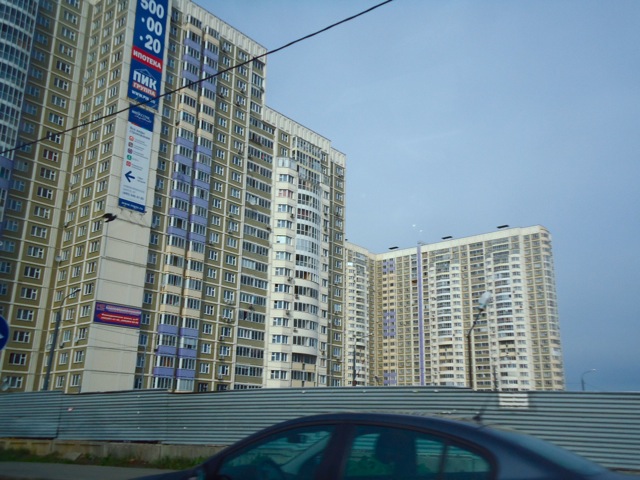
Every time you return to Moscow you must readjust your vision. It is a place that changes very fast, but seems to remain within the same outlines. Was that high-rise apartment block there before? is this shopping center new? was there always this much traffic on this road?

This is the consequence of barely manageable growth. The traffic gets worse by the week and the Metro is a flood-chute of humanity, streaming and stalling people from the mushroom moon colonies on the outskirts through the straining and bursting center. Muscovites resort to increasingly absurd lengths simply to live and move around.

The city gives you lots of time to think about the situation, and how civil authorities are not just helpless, but actively taking steps that history has proven will only make things worse. They build new highways, they add lanes to existing ones, the plan entire new subway lines with dozens of new stations, the acquire enormous swaths of suburban territory to accommodate increased urban growth.

Moscow is a city that aims to be New York or London, but ends up being more like Mumbai or Lagos. And it comes at the expense of the rest of the nation, especially the countryside, which is withering.

So while Moscow's progress through the phases of being a global megacity, there are signs that the investments and heavy-handed, top-down approach of the Putin years are having some effect on the urban landscape. Walking around the Center this month, it felt like visiting a familiar place where the scaffolding had come off after many long years. There are more new buildings, old ones have been renovated, and it seems like there are more long, clean views around the place.

It can't be a coincidence that this is happening during an election year, when a carefully stage-managed "transfer of power" is underway and the chorus of dissent is growing bit by bit.

Nor is it surprising that much of the new building is terrifically tacky. The long Soviet experience left a two-fold legacy on Moscow's physical space: a reverence and overvaluing of the monumental and gargantuan for its own sake, and the belief that only shameless, flashy, blinged-out, busy details and ornamentation are the only ways to communicate serious value. It's why, for example, the Ritz Carlton hotel on Tverskaya looks like it has about a million bricks more than it actually needs, and why every oligarch and high-level bureaucrat wears a platinum wristwatch the size of a tea saucer.

Anyway, some pictures:

The Central House of Artists on Krimsky Val, built in 1980, remains the most starkly astonishing example of Soviet modernism at full swagger 
The brand new Ritz Carlton, built a few years ago a stone's throw from the Kremlin on the site of the former Intourist Hotel, led me to make up a new word: "encrustulated" 

The "new" Hotel Moskva is said to be a replica of the old Stalinist one, which you may recognize from Stolichnaya vodka bottles 
Rows and rows of new apartments in the exurban expanses of Kurkino